
Bambu Lab AMS HT - Automatic Material System


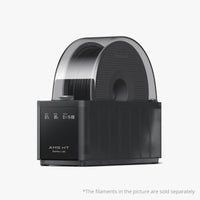
Bambu Lab AMS HT - Automatic Material System
Bambu Lab AMS HT
Specialized for
High-Performance Materials
24-Colors/Multi-material
Serial connect up to 4 AMS 2 Pro & 8 AMS HT, total of 24 filaments
Electro-Magnetic Air Vent
Fast filament drying & air-tight filament storage
85°C Drying Temp
Specialized for high-performance filament drying
Brushless Motor
60% faster feeding speed
Engineered To Better Dry & Use High-performance Filaments
Drying temperature up to 85°C, optimized for high-temperature materials
Independent filament outlet designed for soft or brittle materials
Dry Filament Quickly and Intelligently
Automated venting facilitates dehumidification during drying and airtight sealing for weeks of quality printing
During the drying process, the filament spools rotate automatically to ensure more even drying
AMS HT uses RFID to auto-match drying settings for Bambu official filaments, no manual input needed
Evolved, Polished Design Details
Ceramic filament inlets with Vickers hardness of 1200 significantly enhance durability
Accurate temperature sensor and physical failsafe for safe, precise heating
Clear digital display for easy monitoring of drying status
Compatible With All Bambu Lab Printers
AMS HT Specs
| Item | Specification | |
|---|---|---|
| Body | Dimensions | 114*280*245 mm³ |
| Net Weight | 1.21 kg | |
| Housing Material | PC/PA | |
| Flame Retardant Grade | UL 94 V-0 | |
| Screen | Supports displaying real-time temperature and humidity, and remaining drying duration. | |
| Printing | Filament Supported | PLA, PETG, ABS, ASA, PET, PA, PC, PVA (dried), BVOH (dried), PP, POM, HIPS, Bambu PLA-CF/PAHT-CF/PETG-CF/Support for PLA/PETG, and TPU for AMS. Bypass Filament Outlet: TPE, generic TPU, Bambu PET-CF/TPU 95A, and other filament that contains carbon fiber or glass fiber. |
| Filament Not Supported | PVA (damp), BVOH (damp) | |
| Filament Diameter | 1.75 mm | |
| Spool Dimension |
Width: 50 mm-68 mm
Diameter: 197 mm-202 mm
|
|
| RFID Identification | Supported | |
| Filament Odometry | Supported | |
| Drying | Maximum Temperature | 85 °C |
| Filament Supported | PLA, PETG, Support for PLA/PETG, ABS, ASA, PET, PA, PC, PVA, BVOH, PP, POM, HIPS, Bambu PLA-CF/ PAHT-CF/ PETG-CF, and TPU for AMS | |
| Active Moisture Discharge | Supported | |
| Rotating Drying Mode | Supported | |
| Sealed Storage | Supported | |
| Top Lid Open Detection | Supported | |
| Temperature and Humidity Detection and Maintenance | Supported. Real-time information can be displayed on the screen, printer UI, Bambu Studio, and Bambu Handy. | |
| Voltage |
DC: 24 V
AC: 100 V–240 V~, 50 Hz/60 Hz
|
|
| Average Power | 150 W | |
What’s in the Box
Bambu AMS HT
Desiccant
PTFE Tube (263mm*2+900mm*1)
Bambu Bus Cable-6Pin
Power Cord (For AMS HT ONLY)
Frequently Asked Questions
What is the Bambu Lab AMS HT?
The Bambu Lab AMS HT is a high-temperature filament management system designed to store, dry, and feed filament to compatible Bambu Lab 3D printers. It is especially useful for moisture-sensitive and engineering-grade materials.
What does “HT” stand for?
HT stands for High Temperature. Unlike a standard filament storage system, the AMS HT includes active heating for drying filament before and during use.
How hot can the AMS HT get?
The AMS HT can dry filament at temperatures up to 85°C, making it suitable for many engineering and moisture-sensitive materials.
Can the AMS HT dry filament while I am printing?
Yes. The AMS HT is designed to help maintain proper filament conditions while the material is being used, making it especially helpful for hygroscopic filaments that can quickly absorb moisture from the air.
What types of filament can I use with the AMS HT?
The AMS HT can be used with a wide range of 1.75 mm filaments, including common and engineering materials such as:
- PLA
- PETG
- ABS
- ASA
- PA / Nylon
- PC
- PET
- Support materials
- Carbon-fiber-reinforced materials
- Other moisture-sensitive engineering filaments
Always follow Bambu Lab's recommended drying temperatures and settings for the specific material being used.
Is the AMS HT good for carbon-fiber filament?
Yes. One of the major advantages of the AMS HT is its ability to handle engineering materials that benefit from controlled drying and storage, including many carbon-fiber-reinforced filaments.
Compatibility can still depend on the specific filament and printer configuration, so always verify the material requirements before printing.
Can I use TPU in the AMS HT?
Some TPU materials may be usable depending on their stiffness and the printer setup, but very soft flexible filaments can be difficult to feed through automated filament systems.
For flexible materials, check the filament manufacturer's recommendations and Bambu Lab's current compatibility guidance.
Does the AMS HT have RFID support?
Yes. When compatible Bambu Lab RFID-tagged filament is installed, the system can automatically identify filament information and simplify material setup.
Third-party filament can still be used, but material information may need to be entered manually.
Does the AMS HT monitor humidity?
Yes. The AMS HT is designed to monitor its internal environment so you can better manage filament storage and drying conditions.
Is the AMS HT airtight?
The AMS HT uses a sealed storage design intended to help protect filament from ambient humidity. For best results, keep the unit closed when possible and follow Bambu Lab's recommended storage practices.
Can the AMS HT replace a separate filament dryer?
For many users, yes. Because the AMS HT combines filament storage, active drying, and filament feeding, it can reduce the need for a separate dryer.
For extremely moisture-sensitive materials or specialized drying requirements, always follow the filament manufacturer's drying recommendations.
Can I connect multiple AMS units?
Supported AMS configurations depend on the printer and the additional hubs or accessories being used. Some Bambu Lab printers can support multiple AMS-family units for expanded material capacity.
Check your printer's AMS configuration limits before building a multi-AMS setup.
Is the AMS HT the same as the regular AMS?
No. The AMS HT is designed around high-temperature filament drying and engineering-material support, while the standard AMS is primarily focused on automatic multi-color and multi-material filament management.
The AMS HT is especially attractive to users printing materials that need to stay dry.
Is the AMS HT the same as the AMS 2 Pro?
No. They are different products with different capabilities and intended use cases. The AMS HT focuses heavily on high-temperature drying and handling demanding materials.
Can the AMS HT automatically load and unload filament?
Yes, when used in a supported printer configuration, the AMS HT can participate in Bambu Lab's automated filament loading and unloading workflow.
Can I use third-party filament?
Yes. You are not limited to Bambu Lab filament.
With non-Bambu filament, you may need to manually select or enter the material type, color, and other filament information because third-party spools generally do not contain Bambu RFID tags.
What filament diameter does the AMS HT use?
The AMS HT is designed for standard 1.75 mm filament.
What spool sizes fit in the AMS HT?
The AMS HT is intended for standard 3D-printing filament spools, but spool dimensions vary significantly between manufacturers.
Oversized, unusually wide, or irregularly shaped spools may not fit properly, so check the spool dimensions before use.
Can I use cardboard spools?
Cardboard spool compatibility can vary depending on the spool's construction and condition. Damaged edges, loose cardboard, or excessive friction can interfere with reliable feeding.
Using a spool adapter or transferring filament to a compatible reusable spool may improve reliability when necessary.
Which Bambu Lab printers work with the AMS HT?
AMS HT compatibility depends on the printer and connection hardware being used. It is designed to work within Bambu Lab's newer AMS ecosystem, but some printers may require additional accessories, hubs, or specific connection configurations.
Always verify compatibility for your exact printer before ordering.
Does the AMS HT make multi-color printing possible?
Yes, when used with a compatible Bambu Lab printer and supported configuration, the AMS HT can be part of a multi-material or multi-color printing setup.
Do I still need to dry brand-new filament?
Possibly. New filament is not always completely dry when it comes out of the package, particularly with moisture-sensitive engineering materials.
If you experience stringing, popping, bubbling, rough surfaces, or poor layer quality, drying the filament before printing may help.
How do I know if my filament is wet?
Common signs of moisture-contaminated filament include:
- Popping or crackling sounds while printing
- Excessive stringing
- Bubbling at the nozzle
- Rough or inconsistent surfaces
- Reduced strength
- Poor extrusion consistency
Drying the filament can often improve these issues.
Is the AMS HT worth it if I mostly print PLA?
If you primarily print PLA and do not need active drying, the AMS HT may provide more capability than you need.
It becomes much more valuable for users printing PETG, nylon, polycarbonate, reinforced materials, and other filaments where moisture control can have a major impact on print quality.
Who is the AMS HT best for?
The AMS HT is a particularly good fit for:
- Users printing engineering materials
- Carbon-fiber and reinforced-filament users
- Anyone printing moisture-sensitive materials
- Print farms
- Professional users
- Users who want filament drying and feeding in one system
- Bambu owners building a more advanced multi-material setup
